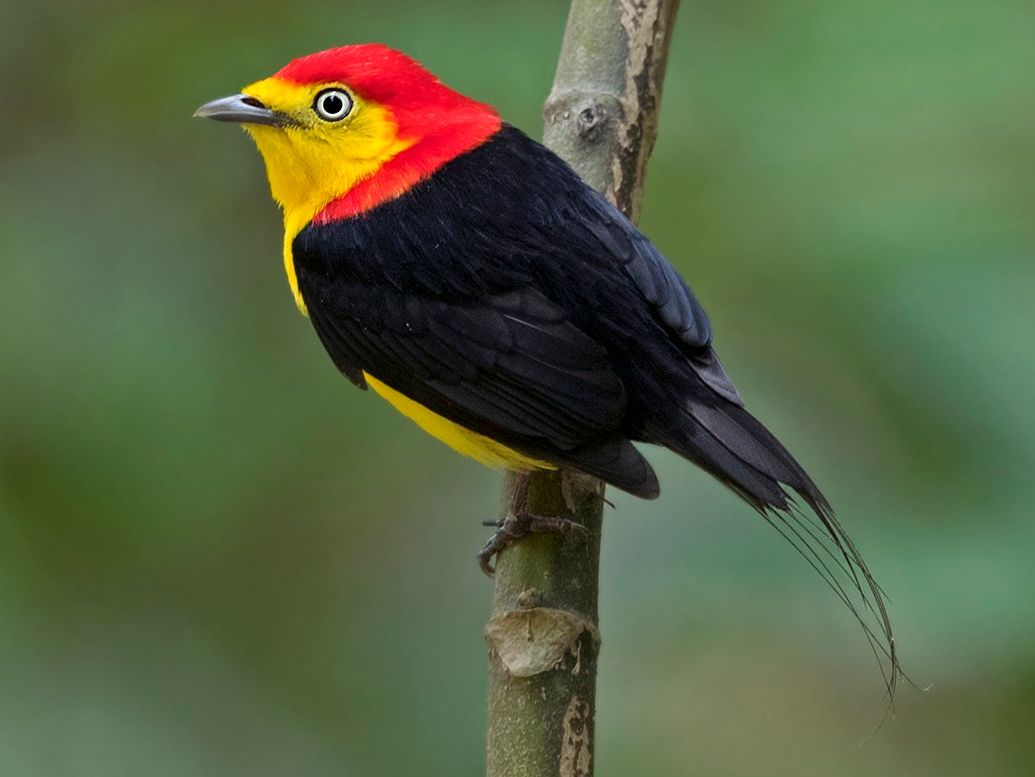
The Amazon Birding along the Shiripuno River: Lost Birding Deep in the Yasuni Biosphere Reserve (National Park & The Waorani Reserve) in Ecuador.
Ecuador is a world birding destination by tradition, from Quito, its capital, you to explore a wide array of ecosystems present in the country with such an easy stroke.
The Amazon Rainforest in Ecuador offers many birding destinations with chances of seeing many colorful species from canopy towers to easy oxbow cruising, dugout canoes, and WIFI.
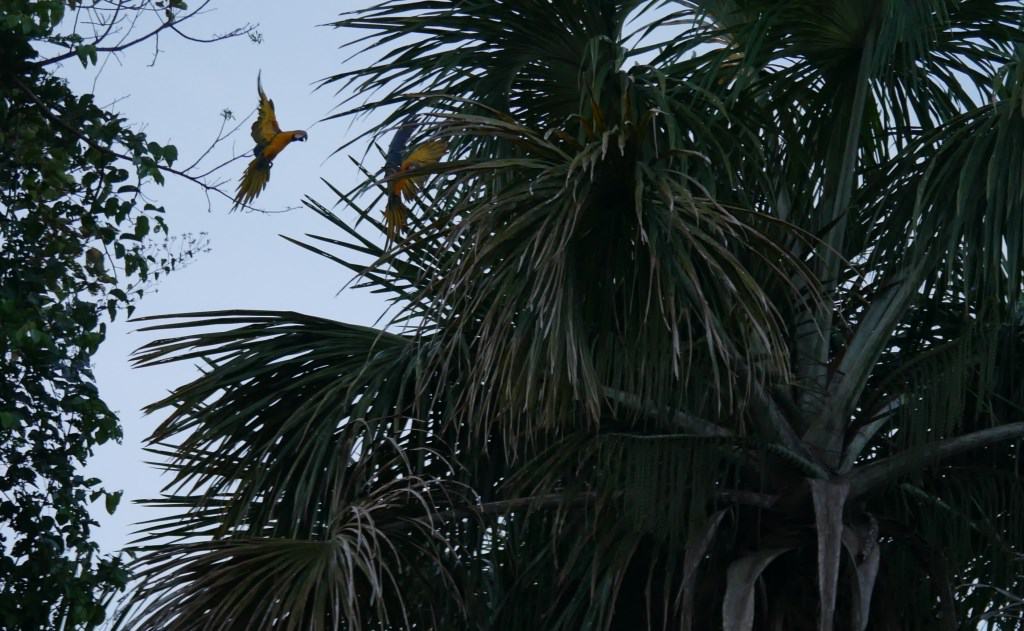
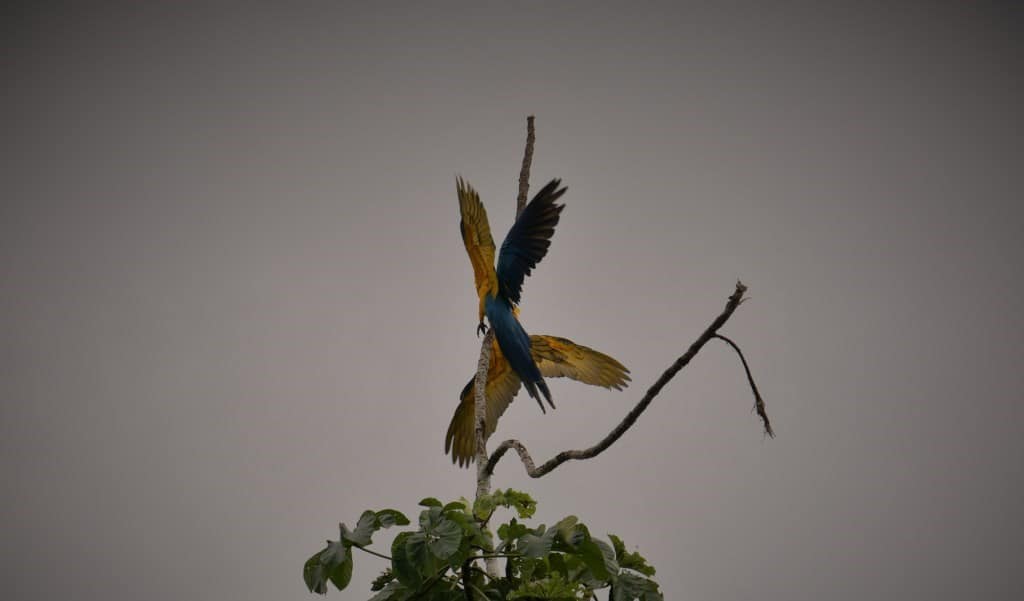
The Blue-and-Yellow Macaw, also known as the Blue-and-Gold Macaw, is a large South American parrot with blue top parts and yellow under parts. It is a member of the large group of neotropical parrots known as macaws. Wikipedia
Why is the Shiripuno River, the Lost Amazon Rainforest Birding in Ecuador?
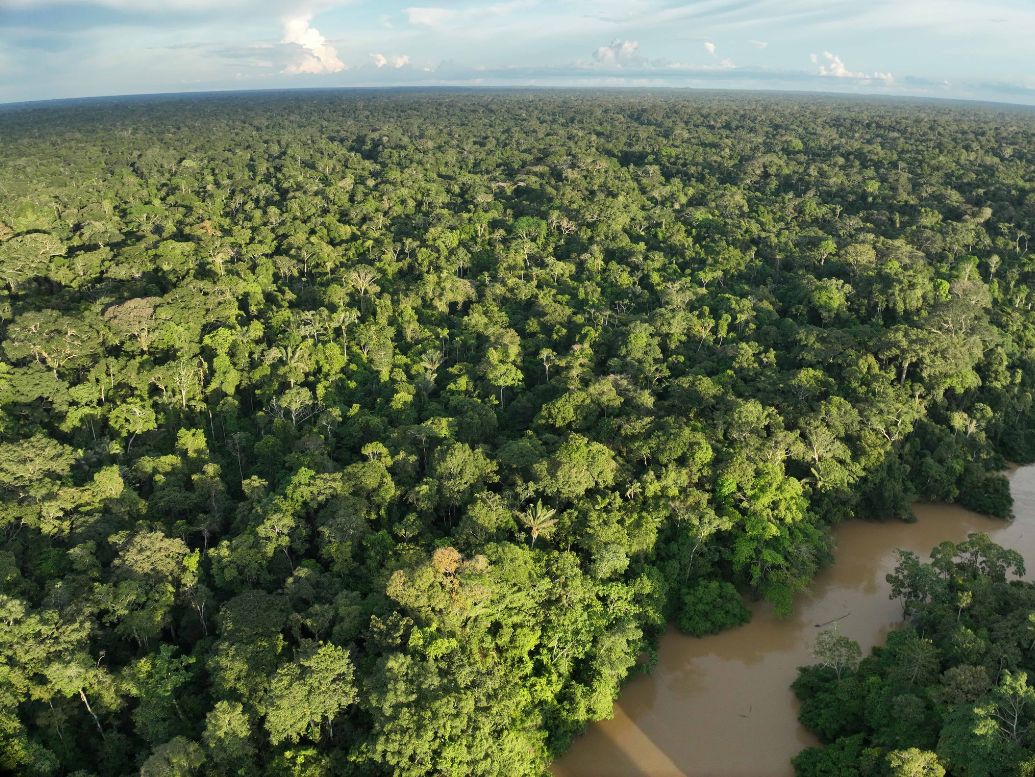
Wild and Remote, away from everything. The Shiripuno River is a wild, sandy river, nestled core of the Yasuni, with many bends, with trees covered in epiphytes and lianas, and with many tree trunks in the river bottom already, shallow in most parts. The Shiripuno River is surrounded by miles of unbroken Amazon Rainforest.
When birding along the Shiripuno River, you will be transported to the early adventures of the greatest naturalists, such as Henry Bates, Alfred Wallace, Humboldt, or Darwin, watching toucans, macaws, oropendolas, flycatchers, tanagers, and mammals, frogs, snakes, trees, and many trees.
The Logistics of the Shiripuno Rivers is unique; the exploration goes beyond the limit of human interaction, it’s the beginning of the wild and unpredictable. We had entered the domains of the forest tales and forest gods: Jaguars, Harpies, Anaconda, Caiman.
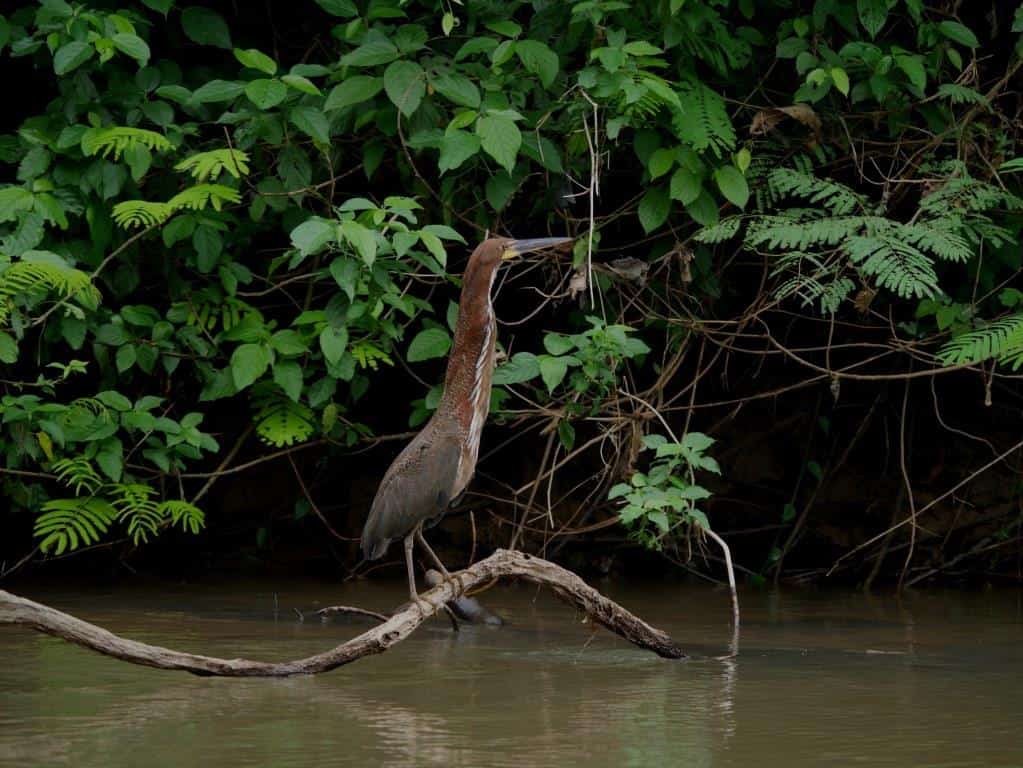
Rufescent Tiger-Heron is a species of heron in the family Ardeidae. It is found in wetlands from Central America through much of South America. Wikipedia
The Amazon Birding along the Shiripuno River
When going Amazon Birding in the Shiripuno River, start scanning the Treetops, always searching for the Queen: Harpy Eagle, check the tallest point in the area, dead branches, for falcons; watch on brand new palm spikes for puffbirds, kingbirds, shaded horizontal medium-sized branches for nunbirds, trogons. From time to time, also check the big branches for Curassows and Large Raptors.
Search ahead of time, predict in the next River Bend, check on logs and trunks for swallows, Kingfishers, Sunbitterns, Sungrebe, or Herons.
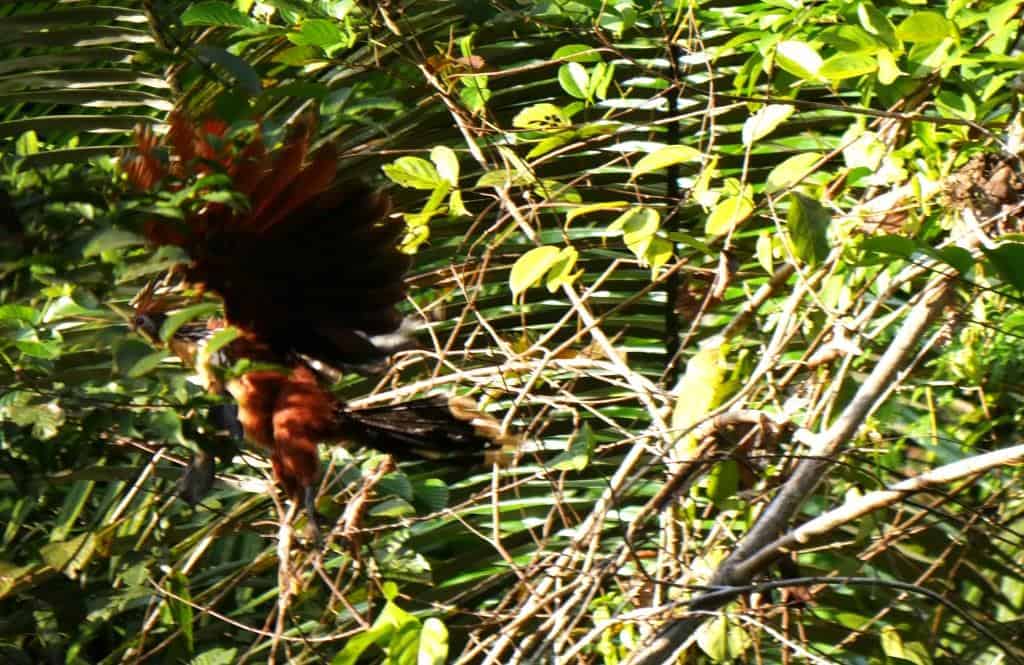
The Hoatzin, also known as the Stinkbird, or Canje pheasant, is a species of tropical bird found in swamps, riparian forests, and mangroves of the Amazon and the Orinoco basins in South America. Wikipedia
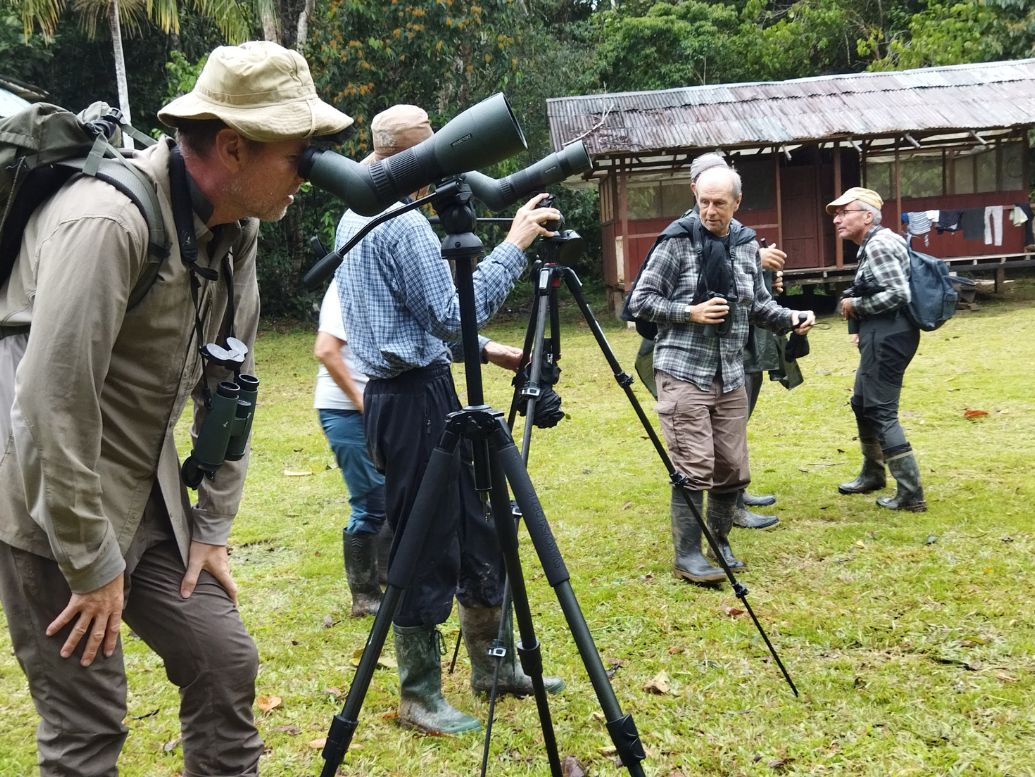
The Birding in the Shiripuno River might catch you off guard. Be ready for birding in the move! Practice with Oropendolas, Flycatchers, and other easy-to-spot birds. You will be birding as the boat moves, and you will lose a few individuals until you pick them up.
There is time to stop to watch birds while drifting in the afternoons or early mornings to listen to the dawn chorus with Chachalacas, Oropendolas, Antwrens, Antshirkes, Woodcreepers, and many others join the party.
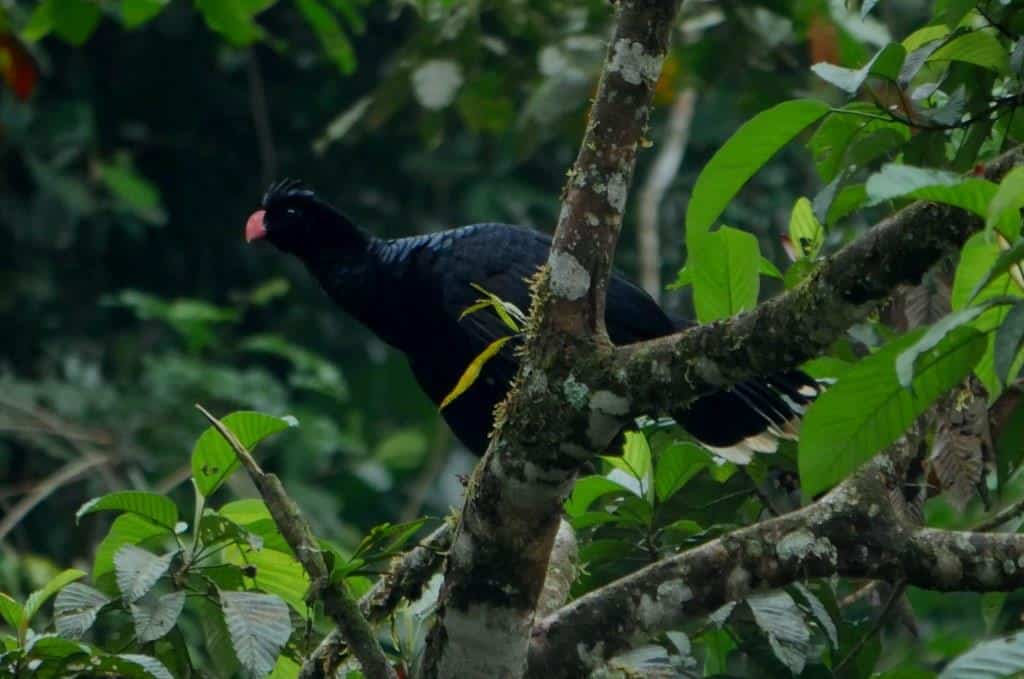
The Salvin’s Curassow is a species of bird in the family Cracidae. It is found in Colombia, Ecuador, and Peru. Its natural habitat is subtropical or tropical moist lowland forest. Wikipedia
Amazon Birding Riverine Habitats
The Shiripuno River is connected to a large community of birds living on the riversides of the main tributaries, such as the Napo River and the Amazon River itself. Birds such as Hoatzin, Russet-backed Oropendola, Great Kiskadee, Blue-and-Yellow Macaw, and many other river specialists are here. There are no River Islands along the Shiripuno River, but enough soil conditions and dynamics to support the same species community.
-
River Bends
The river bends are covered by early successional vegetation, which constitutes a large proportion of the total riverine habitat in Amazonia. After formation, these rivers bend and travel downstream, in a sense, by constant erosion of the older, upstream portions, and the constant increase in size by the deposition of sand and silt on the downstream ends.
This constant change creates an array of early successional habitats on the river bends. The use of and specialization on such habitats by Amazonian birds has remained poorly known.
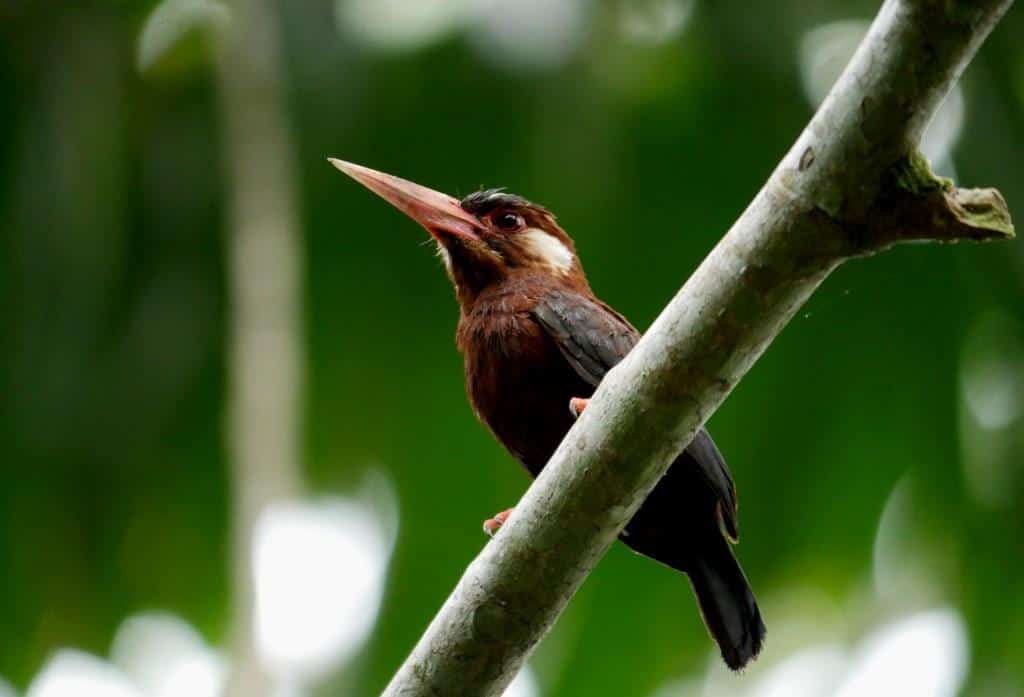
The White-eared Jacamar is a species of bird in the family Galbulidae. It is found in the Amazon Basin of western Brazil, Colombia, Ecuador and northern Peru. Wikipedia
A series of dense foliage made with Giant Gynerium grass, Cecropia Trees, Red Guarea Trees, Triplaris Trees, Ficus Trees, Inga Trees, Mimosa Vines, Cats Claws Vines, Amazon Birding: The Shiripuno River
-
Moriche Swamps
The Moriche Swamps are made mainly by Moriche Palms (Mauritia flexuosa), a dominant palm tree, Wild Costus Ginger, Cats Claws Vine, Pseguria Vines, and more. Many animal species, several bird species, such as the Blue-and-Yellow Macaw, Red-bellied Macaw, Sulphury Flycatcher, and Moriche Oriole, use it for nesting and food. Tapirs, peccaries, fish, and monkeys depend on the forest habitat.
-
Oxbow Lakes
As the Shiripuno River creates a meander over time, due to the river erodes the bank through hydraulic action, abrasion, and erosion. After a long period of time, in the Shiripuno River, the meander becomes very curved, and eventually the neck of the meander becomes narrower, and the river cuts through the neck during a flood, cutting off the meander and forming an oxbow lake. The bird community living here are Hoatzin, Kingfishers, Flycatchers, Donacobius, Herons, Oropendolas, and Caciques. Colonies can be found.
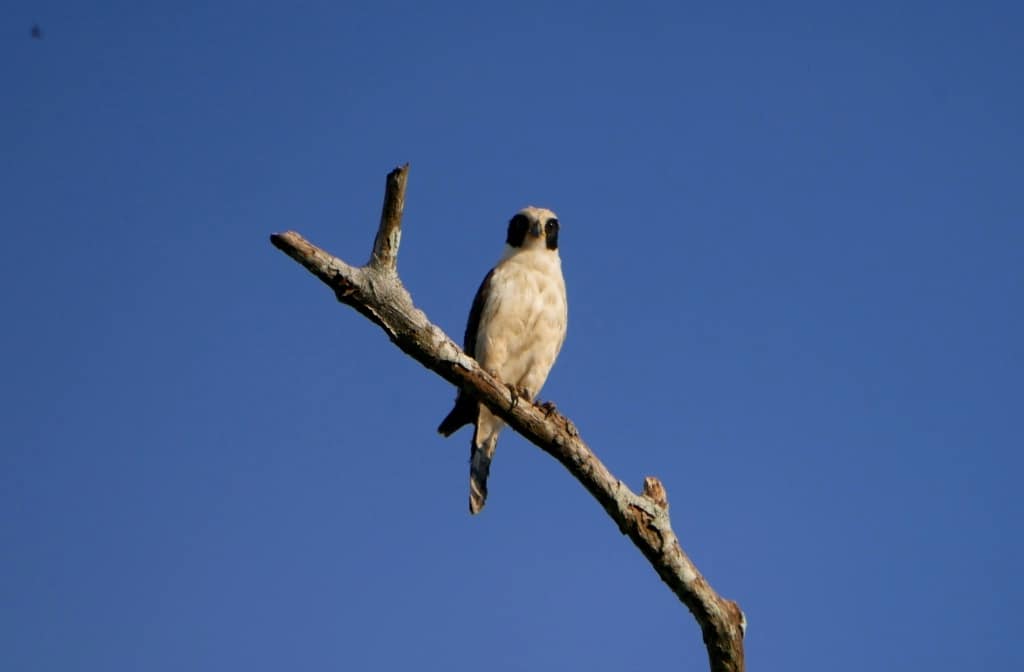
The Laughing Falcon, also called the snake hawk, is a medium-sized bird of prey in the falcon family, the only member of the genus Herpetotheres. This Neotropical species is a specialist snake-eater. Wikipedia
-
Várzea Forests: Seasonal Flooded Forest
As in many locations through the Amazon Basin and its tributaries, high annual rainfall that occurs mostly within a rainy season results in extensive seasonal flooding of areas from stream and river discharge. The result is a 1–6 m rise in water level, with nutrient-rich waters. Specialized avifauna such as the Great Antshrike, Undulated Tinamou, and Dusky-throated Antshrike flocks also present when the plant community allows it.
-
Terra Firme
Terra Firme (“solid ground”) is the most widespread topographical feature: Gently undulating hills composed of layers of alluvial soil that were deposited as much as 2.5 million years ago and subsequently uplifted to positions above flood level.
In the terra firme, the dead organic matter quickly decays and is recycled. Much of the Ecuador Rainforest is covered by an immense terra firme moving towards the west into montane forest in the Andes. The bird species richness in the Amazon Rainforest reaches its peak in the terra firme forest, home of Antbirds, Antwren, Antshrikes, Woodcreepers, Foliage-Fleagers, and Forest Falcon, and many join the mixed flocks moving around through the dense foliage.
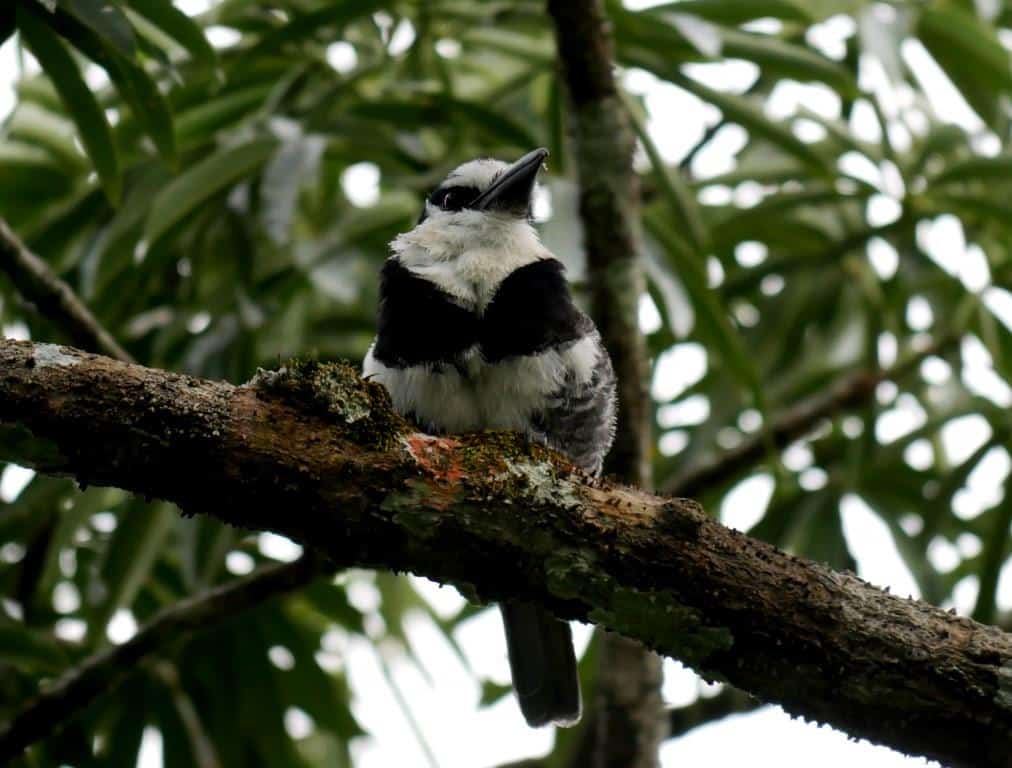
The White-necked Puffbird is a species of puffbird in the family Bucconidae. It is found in forest and woodland from southern Mexico through Central America to the Chocó, northern Colombia (including Magdalena Valley), northern Venezuela, and the western and southern Amazon Basin. Wikipedia
Special species
The special species we focused on during our Amazon Birding in the Shiripuno River show a little degree of specialization on specific microhabitats, such as palm trees, lianas, treetops, and foraging substrates, such as suspended dead leaves, dead trunks, flowers, and fruits.
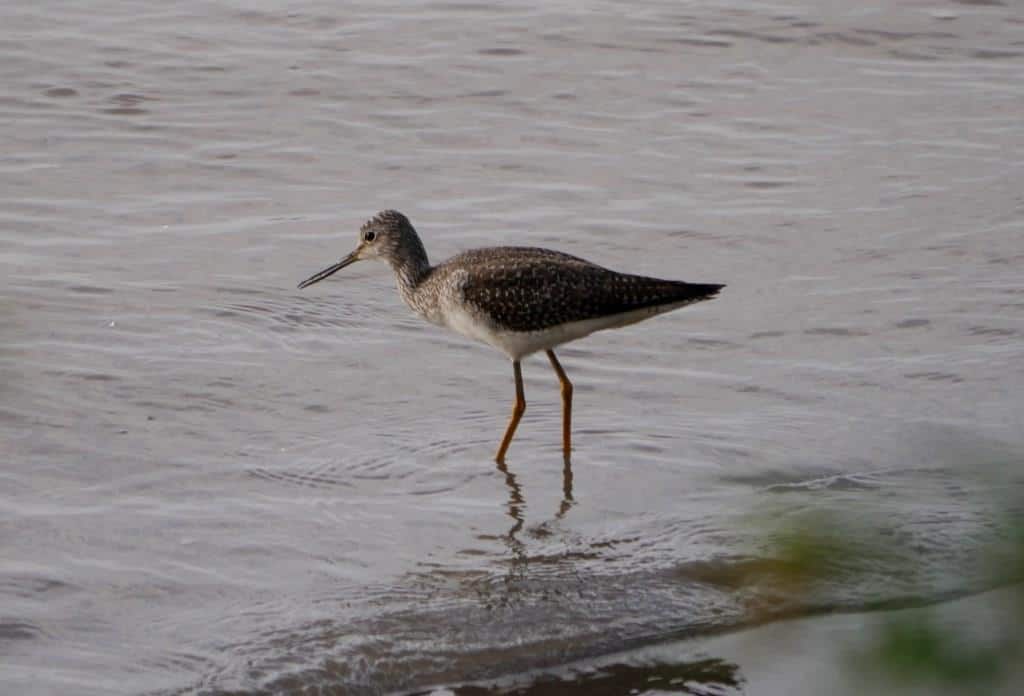
The Greater Yellowlegs is a large North American shorebird. Adults have long yellow legs and a long, thin, dark bill which has a slight upward curve and is longer than the head. The body is grey-brown on top and white underneath; the neck and breast are streaked with dark brown. Wikipedia.
Although the Shiripuno River avian richness is the contribution by habitats other than primary forest that elevates the richness to such high levels in western Amazonia, some of the species you can see while birding in the remote location in Ecuador.
- Hoatzin
- Salvin’s Curassow
- Amazon Kingfisher
- Blue-and-Yellow Macaw
- Great Kiskadee
- White-throated Toucan
- Black-capped Donacobius
- Bat Falcon
- Sunbittern
- and more…