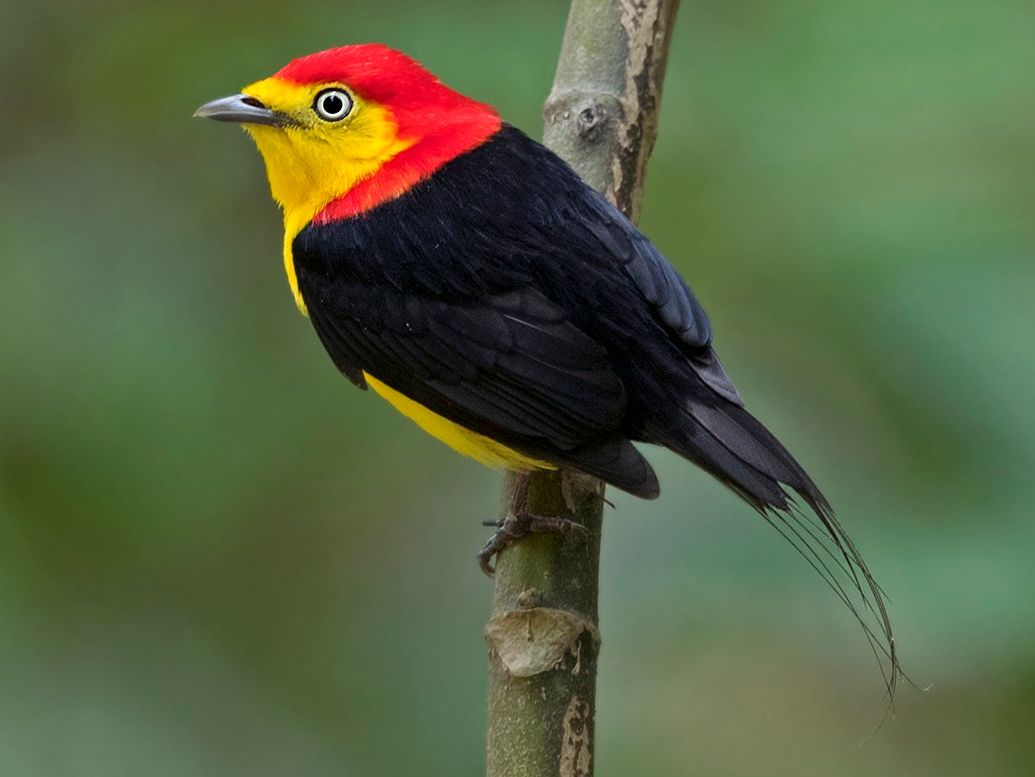
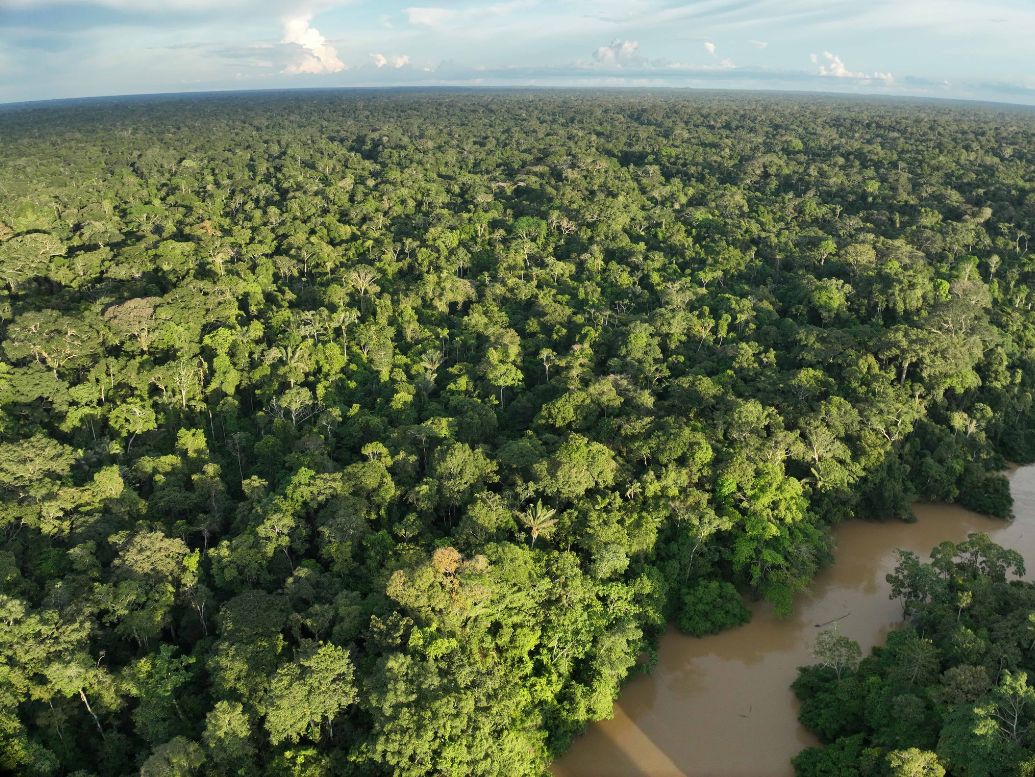

The Puffbirds of the Amazon Rainforest in Ecuador are an intriguing bird family.
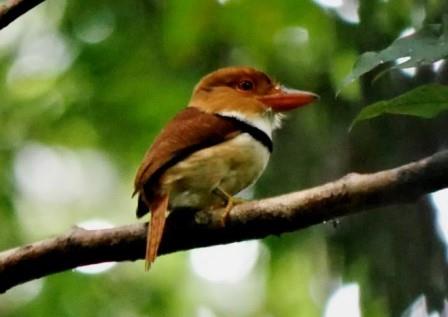
Collared Puffbirds sit secretively at mid-canopy level, found in the Shiripuno Amazon Lodge.
Puffbirds of the Amazon Rainforest in Ecuador are a large head and short tail, with a chunky body. Puffbirds’ loose, abundant plumage and short tails make them look stout and Puffy, giving rise to their English name.
The Puffbirds, Nunbirds, Nunlets, and Monklets are all relatives; they are present all around the Amazon Basin in all habitats.
Watch a video of the White-necked Puffbird in the Yasuni National Park.
Puffbirds of the Amazon Rainforest in Ecuador are tropical tree-dwelling insectivorous birds, sit-and-wait hunters, perching unmoving for long periods while watching for insect prey. As well as arthropods, they may eat small lizards and plant material.
Puffbirds of the Amazon Rainforest Nuclear DNA Analysis Says…
Puffbirds and Jacamars were sister groups, indicating that the Nunlets (genus Nonnula) diverged from the common ancestor of other puffbirds an estimated 25 million years ago, with the genus Malacoptila the next to branch off around 19.1 million years ago in the Miocene epoch.
Nesting of the Puffbirds in the Amazon Rainforest in Ecuador
Puffbirds’ nesting sites are burrows in the dirt, rotten wood, or termite mounds, and they lay clutches of two or three round, small, and white eggs. The incubation lasts around two weeks and is done by both parents. Born blind and naked, crawl to the entrance of the nest burrow at one or two days of age. Adults feed them partly chewed insects.
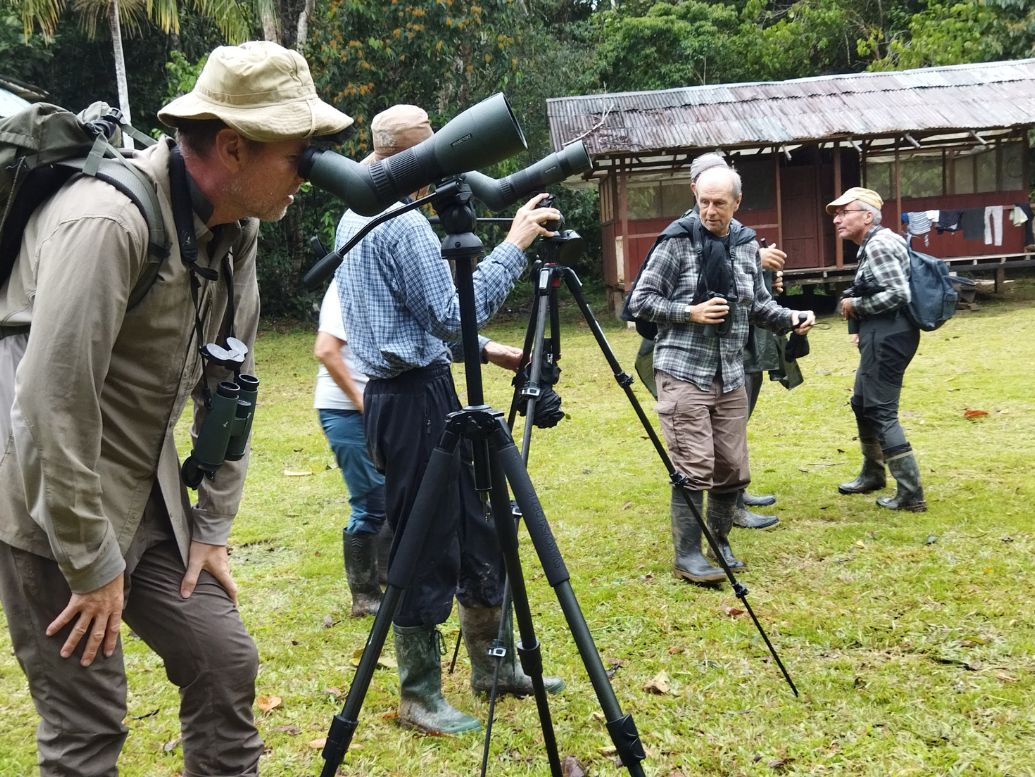
We have the chance to listen to most of the following species of Puffbirds: Nunbirds, Nunlet, and Monklet during Our Birding Trips in the Rainforest.
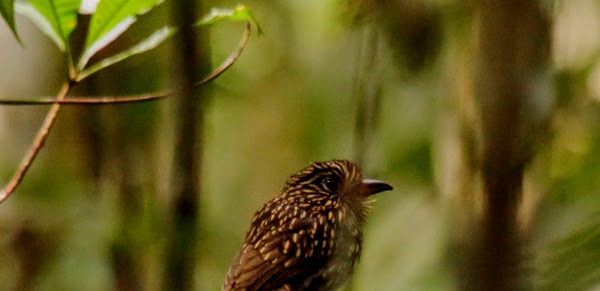
White-chested Puffbird found in the Yasuni Biosphere Reserve.
Listen to Twelve Species of Puffbirds and relatives living in the Rainforest in Ecuador
The Puffbirds are one of the most silent birds in the Neotropics and vocalize very rarely. When calling, they mostly do so at dawn and dusk. It consists of repeated, high-pitched whistles.
The Nunbirds are the most vocal of the family; they have a wide repertoire of calls and often give very loud shouts.
1.- White-necked Puffbird (Notharchus hyperrhynchus)
The White-necked Puffbird is one of the largest, most widespread members of the puffbird family, and frequents the forest canopy. With its massive bill, it feeds on large insects, frogs, and lizards.
2.- Pied Puffbird (Notharchus tectus)
Pied Puffbird is the smallest of the black-and-white puffbirds, a small, mainly black-and-white puffbird, rare in the canopy of Varzea and, to a lesser extent, Terra Firme forests, where it seems to favor forest edges, tall second growth, clearings, and plantations.
3.- Chestnut-capped Puffbird (Bucco macrodactylus)
The Chestnut-capped Puffbird is small in size, with a bright chestnut cap, and a black mask and breast band distinguish it from all other puffbirds. Found in pairs around “edges”, along streams and clearings in the seasonally flooded forest. Seen perched in the mid-story for long periods of time. It forages by sallying out and grabbing insects.
5.- Collared Puffbird (Bucco capensis)
Collared Puffbird has a very large head and short tail, with a chunky body. Like other puffbirds, this species employs a sit-and-wait strategy for hunting, which it uses to catch insects and small vertebrates, which has earned it nicknames such as “lazy bird” and “sleeper”
6.- White-chested Puffbird (Malacoptila fusca)
White-chested Puffbird is inconspicuous and difficult to see. forage in the understory by sallying out to catch insects from low vegetation or the ground. When not foraging, they often sit immobile for long periods of time. The song is a mellow descending trill, and the call is a high descending whistle, peeeuuuuu.
7.- Lanceolated Monklet (Micromonacha lanceolata)
The Lanceolated Monklet is a small, distinctive puffbird, seldom-seen, and oft-overlooked rainforest inhabitant. It is associated loosely with sub-canopy flocks, perching quietly, often without moving for extended periods.
8.- Brown Nunlet (Nonnula brunnea)
Brown Nunlet is rusty brown with darker upperparts and red orbital skin, confined to a very small range within western Amazonia; it occurs in humid lowland terra firme forest, old second growth.
9.- Black-fronted Nunbird (Monasa nigrifrons)
The Black-fronted is the only Nunbird with all-dark plumage and an orange bill. Flocks in groups, perch conspicuously, and regularly erupt choruses of whistles and churrs. It forages for arthropods at lower levels in open floodplain forest, floodplain forest edge, bamboo, and riverine secondary growth. Nests in a burrow in a bank or in the ground.
10.- White-fronted Nunbird (Monasa morphoeus)]
White-fronted Nunbird is glossy black or gray-black with a stout red-orange bill and white face markings on the cere. Resident in the midstory and subcanopy of terra firme forest, frequently found in mixed passerine flocks, a good indication of a nearby flock.
11.- Yellow-billed Nunbird (Monasa flavirostris)
The Yellow-billed Nunbird is unique in displaying a yellow bill and some white on the scapulars. It favors Terra Firme forest, where it seems to be associated with landslides.
12.- Swallow-winged Puffbird (Chelidoptera tenebrosa)
The Swallow-winged Puffbird digs its nest in sandy soil, forming a burrow two or three feet long, where it lays one or two eggs. It is a fairly common bird, perched high on a dead branch along a riverbank or in openings, typically observed in pairs. It is known to capture insects from open perches.